What is a PSA test and why is it important?
PSA (prostate-specific antigen) is a protein produced by the prostate gland. Measuring the PSA level in the blood is one of the most effective methods for the early diagnosis of prostate cancer, benign prostatic hyperplasia (adenoma) and inflammation. In the early stages, cancer may cause no symptoms, so regular checkups are extremely important.
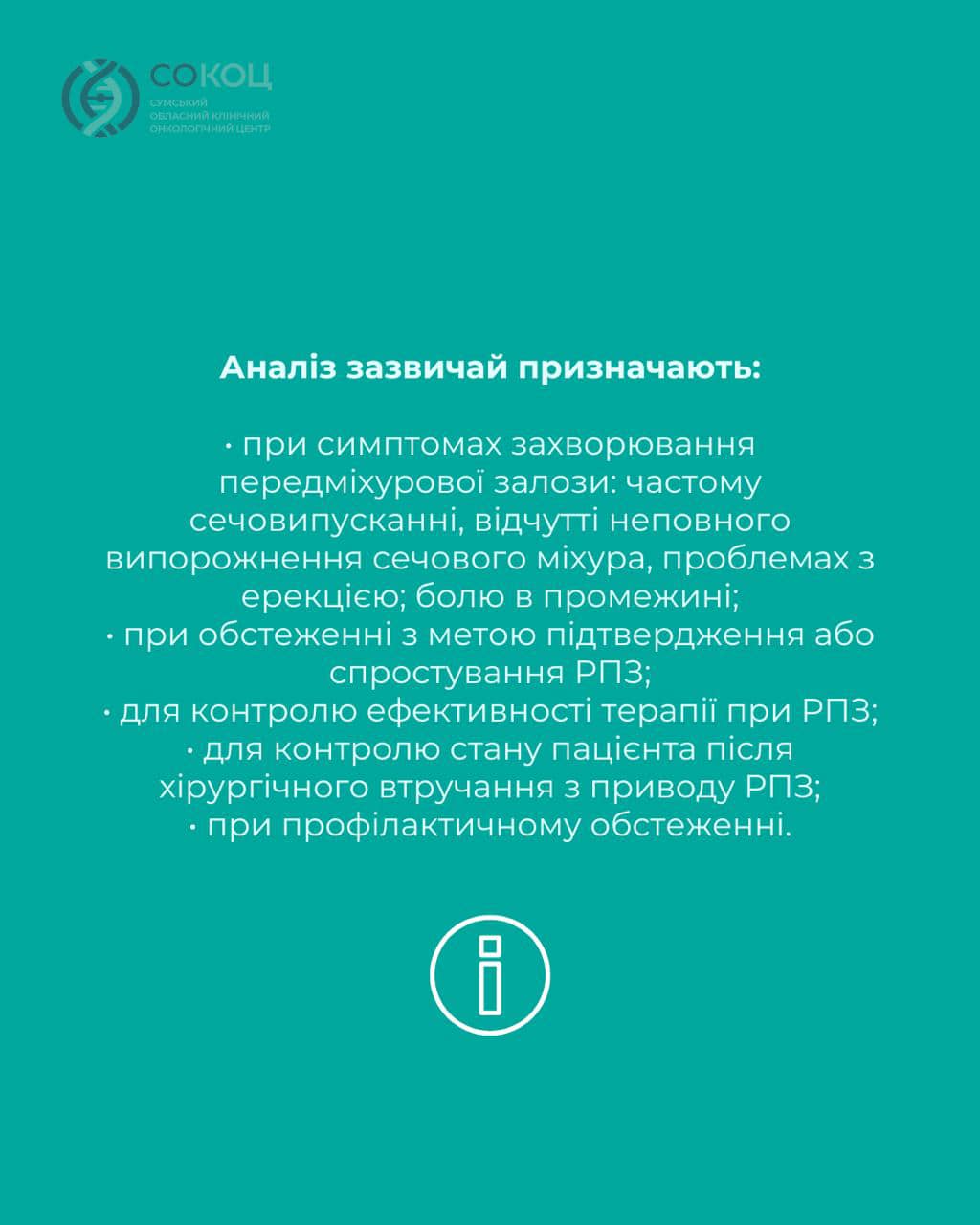
When should you have a PSA test?
- If you have frequent urination, pain in the perineum or discomfort.
- As a preventive checkup for men over 40, especially those with a hereditary predisposition.
- To monitor your condition after surgery or treatment for prostate cancer.
What does the PSA level show?
Normal: up to 4 ng/mL (for men under 60).
Elevated: a level above 10 ng/mL may indicate the need for further tests.
An elevated PSA does not always mean cancer — it may be caused by inflammation, injury or other conditions. Only a doctor can interpret the results.
How should you prepare for the test?
🕘 Blood is drawn on an empty stomach in the morning (before 12:00).
❌ 12 hours before: no food, alcohol or smoking.
❌ 7 days before: avoid prostate massage, biopsies and rectal examinations.
❌ 1–2 days before: avoid sexual activity, intense physical exercise and cycling.
At the laboratory of the Sumy Regional Clinical Oncology Center, you can have a PSA test on modern equipment with highly accurate results. Our specialists take a professional approach to your health.
💡 Prostate cancer is not a death sentence. Early diagnosis makes it possible to detect the problem in time and start effective treatment. Take care of yourself and your loved ones — get a PSA test today.