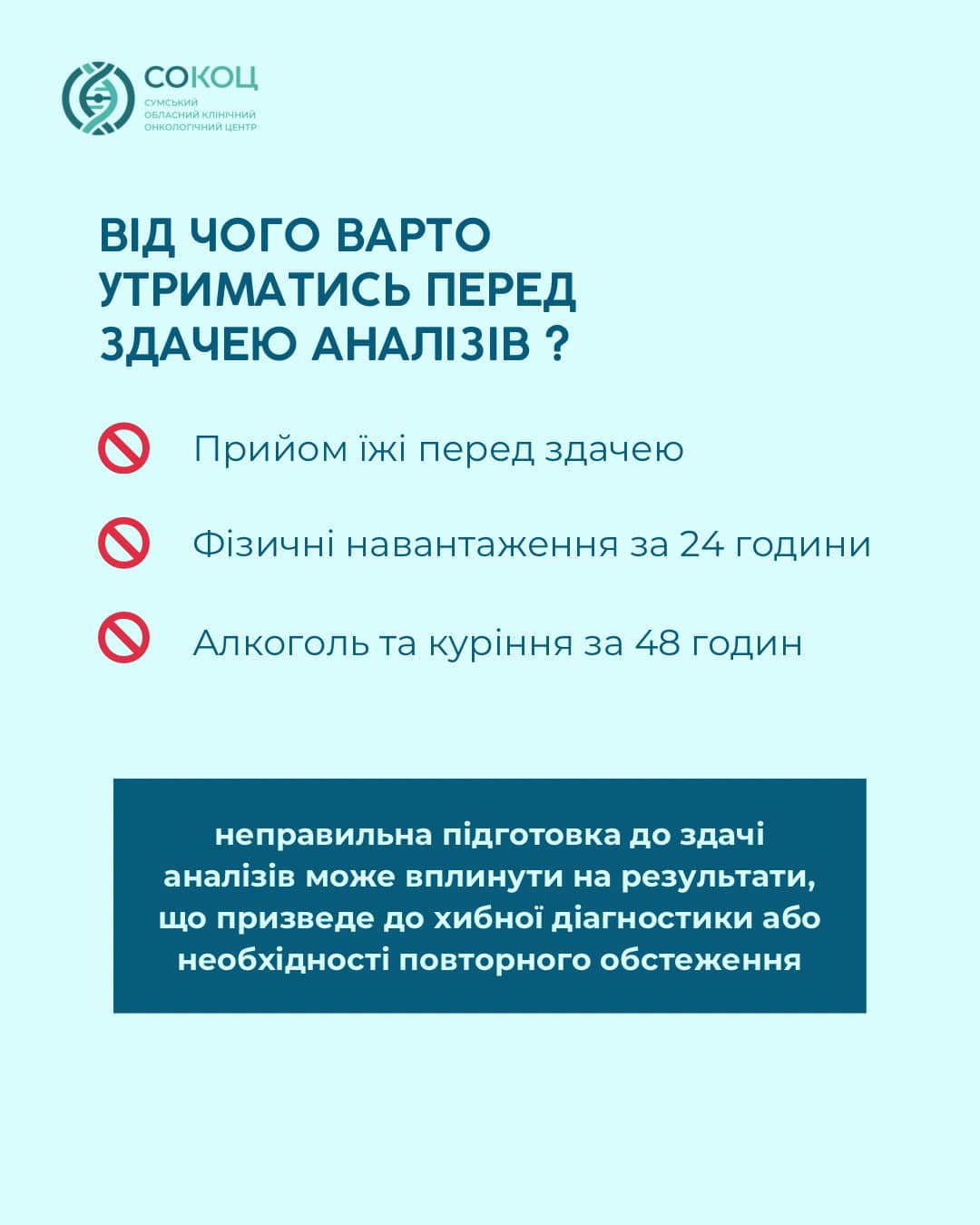
Laboratory tests are one of the key diagnostic tools: they help doctors assess a person's health, detect diseases at early stages and monitor how well treatment is working. However, improper preparation for tests can affect the results, leading to a wrong diagnosis or the need to repeat the tests.
🛑 What can affect the accuracy of test results?
✔ Eating before the test: many values (glucose, cholesterol, hormone levels) change after a meal. That is why most tests should be taken on an empty stomach (8–12 hours after your last meal).
✔ Physical activity: even a light workout or a walk can raise the levels of some hormones and change blood and urine values. Avoid physical exertion for 24 hours before your tests.
✔ Alcohol and smoking: alcohol can distort liver enzyme levels, glucose and the lipid profile. Avoid alcohol for 48 hours before the test.
✔ Medicines: some medicines can significantly affect test results. If you take any medicines, be sure to tell your doctor.
✔ Hormonal factors: some tests (for example, for thyroid or sex hormones) must be taken on certain days of the menstrual cycle.
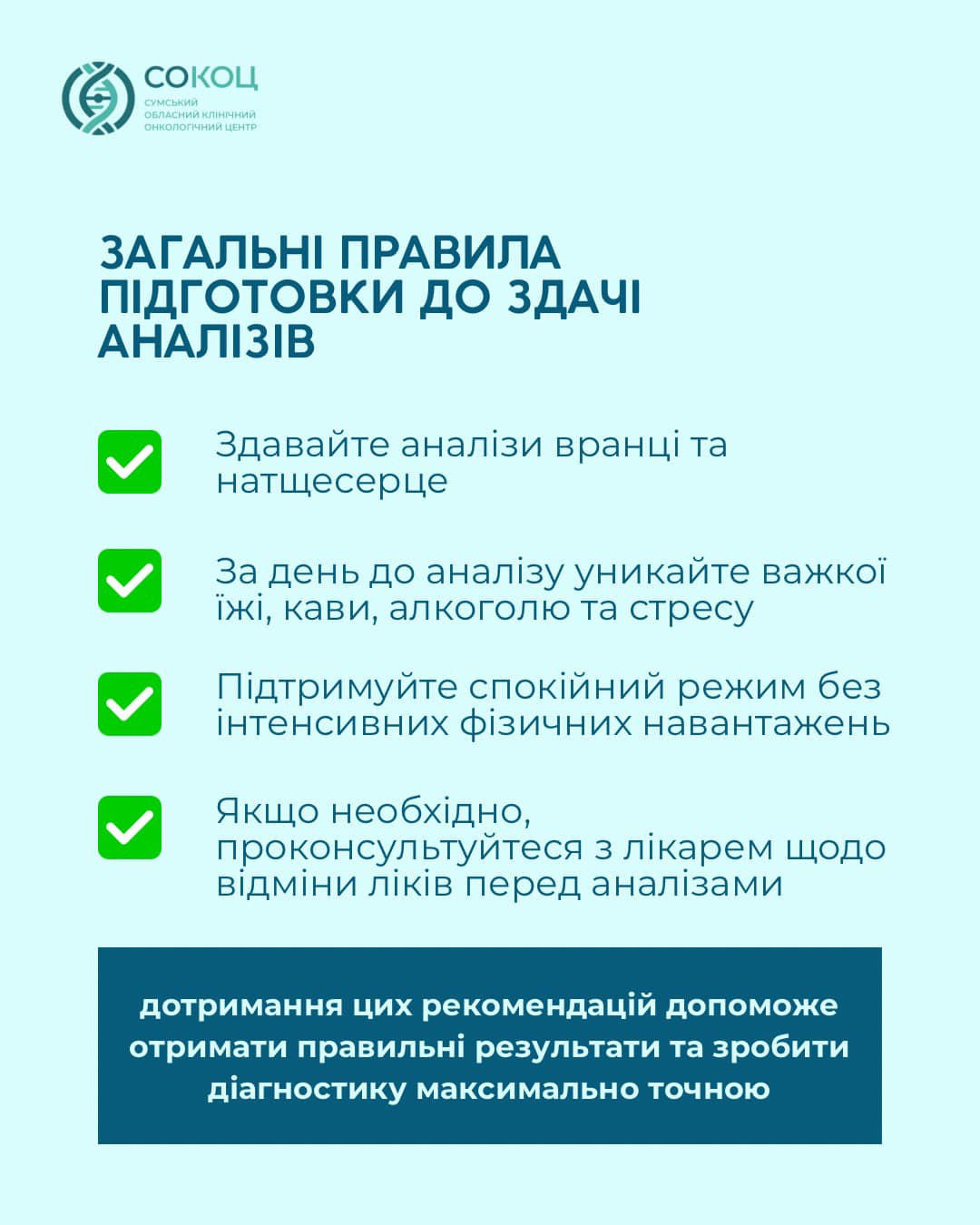
📌 General rules for preparing for tests
🔹 Take tests in the morning on an empty stomach.
🔹 The day before the test, avoid heavy food, coffee, alcohol and stress.
🔹 Keep to a calm routine without intense physical activity.
🔹 If necessary, consult your doctor about stopping your medicines before the tests.
🩺 Following these recommendations will help you get accurate results and make the diagnosis as precise as possible.
Take care of your health: prepare carefully for your tests!